FREQUENTLY ASKED QUESTIONS
Straight answers from Steve on moving your career forward in the AI era and building a career in HR.

Career Advancement in the AI Era
How will AI affect my job and career trajectory?
AI will likely handle repetitive, data-driven tasks, but it will not completely replace the need for human professionals. Instead, it will require workers to double down on human-centric skills that machines cannot replicate, such as empathy and complex ethical judgment. Since AI is not tribal and cannot build authentic trust, your ability to form genuine connections will become your greatest professional asset.
How can I future-proof my career against AI disruption and become “Fireproof”?
You future-proof your career by focusing on uniquely human strengths that allow you to climb the succession list while avoiding layoffs. Degnan’s framework emphasizes mastering three core areas: building strong Relationships, proactively managing your Reputation, and consistently delivering undeniable Results. Being Fireproof also means being agile, being able to read the room, exercise organizational savvy and to leave before a bad situation becomes worse.
How do I position myself to be more promotable?
Some examples of behaviors you must embrace to become promotable include demonstrating a high level of commitment, effectively collaborating without hoarding information, and avoiding workplace drama. Succession planners and executives actively look for candidates who prove they are “all-in” and can make a tangible impact on the business. Remember that being promotable is more about what others think of you, rather than what you think about yourself. The concepts of the Promotable and Fireproof book will help you dive deeper.
What soft skills are most critical in the AI era?
The most critical skills include practicing active compassion, demonstrating emotional intelligence, and exhibiting complex ethical judgment. Developing your charisma and ability to genuinely connect with others will serve as major differentiators, as these are qualities AI cannot simulate.
Should I use AI tools in my daily work?
Yes, you should enlist AI assistants to provide recommendations on how to be more effective and efficient in your role. You can even ask AI for ideas on ways to demonstrate thoughtfulness to coworkers, though you must ensure your execution remains authentic and mindful.
How do I handle continuous change and disruption?
You must embrace agility and become a constant, lifelong learner. Because AI tools learn rapidly, you must adopt a growth mindset and routinely evaluate your work to eliminate wasted time and effort, ensuring you stay competitive.
HR Career Advancement, Career Management, and Being a Better HR Professional
How can I advance my career in HR?
To move up in HR, you must look beyond standard administrative duties to deeply understand the business, embrace data-driven decision-making, and hold yourself accountable for results. Successful HR professionals actively partner with other departments and contribute meaningfully to shaping the company’s culture.
What makes a modern HR professional successful?
Successful HR leaders possess the courage to make difficult decisions, including directly addressing incompetence or ethical breaches. They also excel at active listening, practicing empathy, and understanding the burdens that employees and leaders carry.
How should HR leaders handle organizational confidentiality?
Trust is a crucial currency for HR professionals, and you must protect confidential information at all costs. A helpful strategy is to use a “mental dry erase board” to hold onto sensitive information just long enough to advise someone, and then mentally wipe it clean to ensure it is never shared.
How can I build trust as an HR professional?
You can build trust by refusing to participate in gossip, ensuring you are never the source of an information leak, and treating private conversations with strict discretion. Lapses in confidentiality can have massive legal ramifications and will quickly derail an HR career.
How can HR professionals effectively manage organizational change?
Change requires addressing resistance head-on, such as dealing with passive-aggressive managers who attempt to slow down new initiatives. HR professionals must ensure that strategic mandates—such as increasing agility, speeding up decision-making, and improving communication—are fully adopted across the organization.
What is the best way to handle corrective feedback in HR?
You should view feedback as an opportunity to learn rather than a personal attack. Demonstrating receptivity and having the courage to both give and receive constructive criticism are essential skills for effectively managing talent and coaching executives.
What would be a good professional development conference session to attend for HR career improvement?
Conference sessions like Steve Degnan’s “Resilience in the AI Era For HR Professionals” or “Becoming Promotable and Fireproof” are great professional development sessions to attend for career advancement because they provide actionable insights targeting your career where most other conference sessions are focused on technical skills and changing legal compliance in HR.
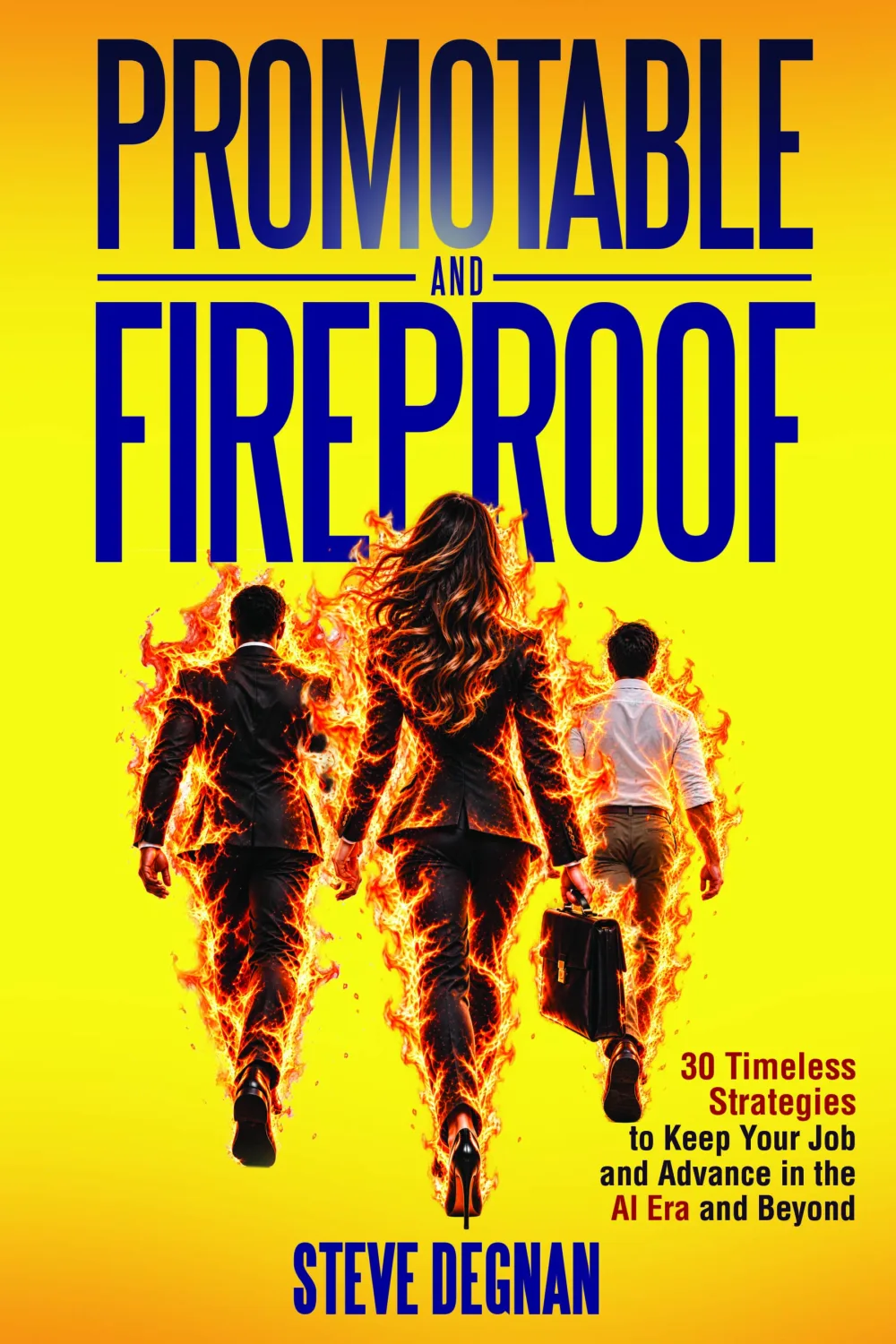
Promotable and Fireproof Self Assessment
Find out where you stand across the relationships, reputation, results, and AI habits that shape long-term career success.