
You’ve signed the retainer. The consulting firm showed up with a sharp deck, a proprietary methodology, and a team of analysts who’ve never run a P&L. Six months later, you have a binder full of recommendations and a workforce that’s quietly waiting for this to blow over.
Organizational transformation is the process of fundamentally reshaping how a company operates, decides, and delivers value – not just reorganizing boxes on a chart or rolling out a new operating model from the top down. When it works, it sticks because the people doing the work own it. When it fails, it’s almost always because someone outside the system tried to design a solution for people they don’t understand.
Key Takeaways
• Externally-driven transformations fail not because the strategy is wrong, but because ownership never transfers to the people who have to execute it.
• Pushing decision-making authority to the lowest viable level is the single most reliable mechanism for building organizational resilience.
• The “Project Agility” re-engineering at Nestlé Purina proved that transforming a $13B business requires fewer consultants and more internal accountability structures.
• Prosci research shows organizations with excellent change management are 4.6 times more likely to stay on or ahead of schedule – the mechanism is psychological ownership, not process compliance (Prosci, 2024).
• The goal isn’t to eliminate outside expertise. It’s to make sure your people are driving the car, not riding in the back seat.
Why Do Most Organizational Transformations Fail Before They Start?
The failure isn’t in the strategy document. It’s in the handoff.
Most large-scale transformation efforts are designed to be delivered, not to change behavior. A consulting firm maps your processes, identifies inefficiencies, builds a future-state model, and presents findings to your senior leadership team. Everyone nods. The consultants leave. And then the organization slowly reverts to what it was, because nothing in the actual human system changed.
The embedded consultant trap is this: the people who designed the solution have no stake in whether it works.
They get paid for the engagement, not the outcome. Your team, meanwhile, was never asked to own the problem. They were told what the problem was. That distinction is the whole game.
A common scenario in large organizations: a Fortune 500 business unit brings in a major consulting firm to re-engineer its supply chain. The consultants spend eight months building a new operating model. The model is technically sound. But the middle managers who have to implement it were never involved in the diagnosis. They don’t trust the recommendations. They comply on paper and route around the new system in practice. Two years later, the business unit looks almost identical to what it looked like before the engagement started.
This isn’t a failure of strategy. It’s a failure of ownership architecture.
What Did “Project Agility” at Nestlé Purina Actually Teach About Transformation?
Re-engineering a $13B business is not a theoretical exercise. Steve Degnan lived it.
During his tenure as CHRO at Nestlé Purina, the organization undertook a large-scale agile re-engineering initiative that touched every layer of the business. The core lesson wasn’t about methodology. It was about where decisions actually get made.
Most transformation programs are designed with a top-down logic: leadership defines the future state, middle management translates it, front-line employees execute it. That sequence feels clean. It’s also why most transformations stall at the middle layer.
The Purina work revealed something that runs counter to how most executives think about change: the people closest to the work almost always know what’s broken. They just don’t have permission to fix it. The transformation accelerated when the design process moved from “here’s what we’re changing” to “here’s the problem, now you tell us how to solve it.”
That shift sounds simple. It’s not. It requires leadership to genuinely tolerate answers they didn’t anticipate. It requires HR to build accountability structures that reward initiative rather than compliance. And it requires executives to resist the reflex to centralize decisions when things get uncomfortable.
The framework that emerged from that work has a name: the Ownership Transfer Model. The Ownership Transfer Model is the deliberate process of moving decision rights, problem framing, and solution design from external advisors or senior leadership down to the teams who will actually execute the change. It’s not delegation. Delegation keeps the authority at the top and assigns tasks downward. Ownership transfer moves the authority itself.
If you want to understand how Steve Degnan approaches organizational consulting and speaking engagements, the Purina experience is the foundation. Not a case study from a textbook. Thirty-two years of doing the actual work.
How Do You Push Decision-Making Authority Down Without Losing Control?
This is the question every senior leader asks. It’s also the question that reveals whether they actually want transformation or just the appearance of it.
Pushing authority down doesn’t mean abandoning governance. It means being precise about which decisions belong at which level. Most organizations are over-centralized not because leaders are control freaks, but because nobody ever drew the map.
Here’s the framework Steve uses in transformation work, called the Decision Altitude Matrix:
| Decision Type | Where It Belongs | What Leadership Provides |
| Operational execution | Front-line teams | Guardrails, not approval |
| Process design | Middle management | Problem definition, not solution |
| Resource allocation | Business unit leaders | Strategic constraints, not micromanagement |
| Strategic direction | Senior leadership | Vision and accountability |
| Culture and values | Every level | Modeling, not mandating |
The Decision Altitude Matrix is a tool for mapping decision rights to organizational layers based on proximity to execution, not proximity to power. Use it when a transformation is stalling because teams are waiting for approvals that should never have required escalation. Don’t use it as a substitute for clear accountability structures – the matrix tells you where decisions should live, not who’s accountable when they go wrong.
The most expensive leadership failure in transformation work isn’t making the wrong call. It’s creating a system where nobody feels authorized to make any call.
When AGC CEO Takuya Shimamura wrote to his 60,000-person workforce that “it is the role of the leader to switch the light on inside all employees,” he wasn’t being poetic (Asahi Glass Company, 2015). He was describing an architecture. Light doesn’t flow down from the top. It gets switched on at every level, or it doesn’t get switched on at all.
If you’re curious whether your organization has the right decision architecture in place, the leadership effectiveness assessment is a useful starting point.
What’s the Real Cost of Getting This Wrong?
The GM ignition switch crisis is the most brutal illustration of what happens when decision authority is misaligned with accountability. Over 100 people died because engineers who knew about the faulty switches didn’t have a clear path to escalate the problem, and the organizational culture punished bad news (General Motors / Public Records). The problem wasn’t that nobody knew. The problem was that the system wasn’t built for people to act on what they knew (Harvard Business School Online, 2015).
That’s an extreme case. But the mechanism is identical in every organization where transformation fails quietly: the people with the information don’t have the authority, and the people with the authority don’t have the information.
Waiting for the right consulting firm to solve this is the most expensive move you can make. Not because consulting is bad, but because no external firm can build internal ownership on your behalf. They can diagnose. They can design. They can facilitate. But the moment they leave, the ownership question is still unanswered.
The leadership development work that actually produces results in large organizations is built on exactly this principle: change sticks when the people responsible for outcomes are the same people who designed the path to get there.
If you’re leading a business unit through transformation and you’re tired of paying for slide decks that don’t move the needle, reach out to Steve directly to talk through what a different approach looks like.
Who Is This Approach NOT Right For?
Straight talk: this model isn’t for every situation.
If your organization needs a rapid, externally-driven restructuring because the business is in financial distress and there’s no time to build internal ownership, a different approach is warranted. Speed sometimes requires top-down authority, and pretending otherwise is its own kind of consulting theater.
This approach also requires senior leadership that genuinely tolerates ambiguity. If your executive team needs to approve every decision before it moves, the Ownership Transfer Model will create friction rather than momentum. The framework works when leadership is willing to define the boundaries and then get out of the way.
And if your culture actively punishes failure, pushing decision authority down without first addressing that dynamic will accelerate bad outcomes, not good ones. Ownership without psychological safety is just exposure.
The newsletter archive covers these cultural preconditions in detail if you want to go deeper before committing to a transformation approach.
FAQ
How long does a real organizational transformation take?
Honest answer: eighteen to thirty-six months for a meaningful shift in how decisions get made and how work gets done. Anyone promising faster results at scale is selling the engagement, not the outcome. You can see early behavioral changes in ninety days if the ownership architecture is right, but culture moves at the speed of trust, not the speed of a project plan.
What’s the difference between transformation and reorganization?
Reorganization changes the chart. Transformation changes the behavior. You can move boxes around indefinitely without changing how people make decisions, escalate problems, or take initiative. Most “transformations” are reorganizations with better marketing. The test is simple: six months after the change, are people behaving differently, or just reporting to different people?
How do we know if our transformation is actually working?
Watch the decision latency. If decisions that used to take three weeks are now taking one, something real is happening. If they’re still taking three weeks but now they go through a new committee instead of an old one, nothing changed. The speed and level at which decisions get made is the most honest leading indicator of transformation progress.
Can an outside advisor actually help with internal transformation, or is that a contradiction?
It’s not a contradiction if the advisor’s explicit goal is to make themselves unnecessary. The right external partner helps you build the internal capability to own the change, then steps back. The wrong one builds dependency. Steve Degnan’s approach, informed by 32 years of corporate experience including 20 as a CHRO, is structured around transferring capability, not maintaining a retainer.
What do you do when senior leadership says they want transformation but won’t give up control?
Name it directly. The most common transformation failure mode isn’t resistance from the front line. It’s executives who commission change and then quietly undermine it by reclaiming decisions that were supposed to move down. That pattern has to be addressed at the top before the organization below it can move. It’s an uncomfortable conversation, and it’s the most important one.
How is this different from standard change management?
Change management, as most firms practice it, is a communication and adoption program layered on top of a decision that’s already been made. This is different. The Ownership Transfer Model starts before the solution is designed, because the people who will execute the change need to be part of building it. Prosci’s research shows that organizations with excellent change management are 4.6 times more likely to stay on schedule (Prosci, 2024), but the mechanism isn’t the process. It’s the ownership that the process either creates or doesn’t.
When should we bring in outside help versus handling transformation internally?
Bring in outside help when you need an honest diagnosis without political interference, when you need a framework your internal team hasn’t built before, or when the scale of the change exceeds your current capacity to manage it. Handle it internally when you have the capability and the credibility to lead it. The mistake most organizations make is bringing in outside help and then handing the whole thing over, which is how you end up with a binder and a bill.
If your organization is in the middle of a transformation that’s losing momentum, or you’re about to commission one and want to build it right from the start, connect with Steve Degnan to talk through what the Ownership Transfer Model looks like for your specific situation. The conversation is direct, the advice is practical, and there are no slide decks involved.
About the Author
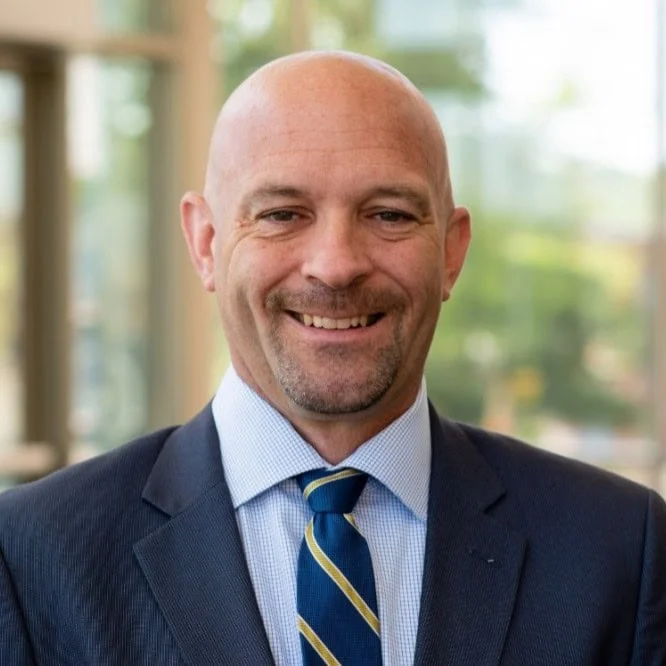
Steve Degnan is a keynote speaker and organizational advisor specializing in leadership effectiveness, team resilience, and culture transformation. With 32 years of corporate experience including 20 years as CHRO of a $13B food and pet food company, Steve works with Fortune 500 companies, business units undergoing transformation, and executive teams who need straight-shooting counsel grounded in real-world experience, not theory.
References
Prosci – organizations with excellent change management are 4.6X more likely to stay on or ahead of schedule
Harvard Business School Online – AGC CEO Takuya Shimamura’s 60,000-person workforce memo and organizational transformation
Harvard Business School Online – GM ignition switch crisis and organizational accountability failures