
Most executive teams don’t have a leadership pipeline problem. They have a leadership clarity problem. And by the time it shows up in turnover data or failed transformations, the cost is already baked in. According to McKinsey research on organizational health, companies in the top quartile for leadership effectiveness outperform peers by a factor that makes the investment conversation almost irrelevant. The question isn’t whether to invest. It’s whether what you’re doing actually works.
Before you can evaluate your options clearly, you need to understand what’s actually broken. And it’s rarely what the last engagement survey said.
Direct Answer
Organizations with 500 or more employees typically struggle with leadership development not because of budget or intent, but because they’re solving the wrong problem. Most programs focus on leadership knowledge. Frameworks, workshops, competency models. What actually drives organizational performance is leadership behavior under pressure, which requires a fundamentally different approach: real-context coaching, candid feedback, and accountability structures that outlast any training event.
Key Takeaways
- Leadership development fails most often because it teaches concepts without changing behavior. And behavior only changes when there’s accountability attached to it.
- The gap between what organizations think their leaders can do and what those leaders actually do under pressure is the single most expensive gap in large enterprises.
- A CHRO or business unit leader evaluating consulting options needs to distinguish between programs that build awareness and programs that build capability. They’re not the same thing.
- Transformation work without cultural infrastructure to support it tends to revert within 18 months. The program ends, the old defaults return.
- Experience-based counsel from someone who has sat in the seats being developed is qualitatively different from theory-based coaching. The mechanism matters, not just the credential.
Why Do So Many Leadership Programs Fail to Stick?
The honest answer is structural, not motivational. Most programs are designed to be delivered, not to produce durable change.
A typical scenario: a Fortune 500 business unit invests in a multi-day leadership cohort program. Participants leave energized. Managers report high satisfaction scores. Six months later, the behaviors that prompted the investment, micromanagement, poor communication under stress, failure to develop direct reports, are largely unchanged. Not because the content was bad. Because the environment those leaders returned to hadn’t changed, and no one was holding them accountable to apply anything differently.
Behavior change requires consequence, not just content. That’s the mechanism. When a leader learns a new framework in a classroom but returns to a culture that rewards the old behavior, the old behavior wins. Every time.
This is why Steve Degnan’s approach to organizational consulting is built around accountability structures and real-context application. Not just frameworks delivered in a room. With 32 years of experience, including 20 years as CHRO at a $13 billion food and pet food company, the work is grounded in what actually changes behavior at scale, not what looks good in a program brochure.
What’s the Real Problem. And Why Does It Keep Persisting?
The root cause isn’t a lack of leadership content. Organizations have access to more leadership development material than at any point in history.
The problem is diagnostic failure. Most organizations treat leadership gaps as knowledge deficits when they’re actually behavioral or systemic. They commission a training program when what they need is a structural intervention. The two feel similar from the outside, both involve consultants, both produce deliverables, but they produce entirely different outcomes.
Consider a common scenario: a senior leadership team is experiencing friction. Communication is poor, silos are hardening, and high-potential managers are leaving. The default response is a team effectiveness workshop. What the situation actually requires is an honest assessment of whether the leadership above that team is modeling the behaviors it’s asking for. And whether the incentive structures are aligned with the culture the organization claims to want.
Misdiagnosis is expensive. Not just in consulting fees, but in the cost of the problem continuing while the wrong solution gets implemented.
The workplace trends shaping leadership demands in 2026 make this even more acute. The behavioral demands on leaders are increasing faster than most development programs are evolving.
The Promotable and Fireproof Framework: What Actually Builds Leadership Capability?
The Promotable and Fireproof Framework is a leadership development model built around two distinct but interdependent conditions: being genuinely ready for greater responsibility, and being resilient enough to survive the inevitable tests that come with it.
Most leadership development focuses on the first condition and ignores the second entirely. That’s a significant gap.
Leaders who are technically capable but brittle under pressure create organizational risk. They perform well in stable conditions and become liabilities during transformation or crisis. Leaders who are resilient but not genuinely developing their teams create a different problem: they survive, but they don’t produce.
The framework asks two diagnostic questions about every leader in your pipeline:
- Are they building capability in the people around them, or are they accumulating personal value?
- Are they performing well because the environment is favorable, or because they’ve built genuine resilience?
The answers to those questions tell you more about your pipeline health than any 360-degree survey.
Steve Degnan’s consulting work applies this framework at the organizational level. Helping CHROs and executive teams identify which leaders are genuinely ready, which ones need structured development, and which ones are occupying critical roles without the resilience to hold them under pressure.
How Does This Approach Compare to What Most Organizations Are Already Doing?
| Approach | What It Produces | What It Misses | Risk If Used Alone |
| Off-the-shelf leadership training | Awareness, common vocabulary | Accountability, behavior change | Reverts within 6-12 months |
| Internal HR-led development | Consistency, cultural alignment | Candor, external perspective | Blind spots reinforced |
| Large consulting firm engagement | Structured methodology, scale | Practitioner credibility, real-context insight | Recommendations without execution |
| Theory-based coaching | Conceptual growth | Organizational systems context | Individual change without team impact |
| Experience-based advisory (Steve Degnan) | Behavior change, accountability, cultural infrastructure | Not suited for organizations wanting validation over candor | Requires leadership willingness to hear hard truths |
The distinction that matters most in that table isn’t cost. It’s mechanism. Large consulting firms produce frameworks. Theory-based coaches produce reflection. What organizations in transformation actually need is someone who has run the function, made the hard calls, and can tell the difference between a culture problem and a people problem without running a six-month diagnostic.
The most expensive consulting engagement isn’t the one with the highest fee. It’s the one that produces a report that sits on a shelf.
What Should CHROs and Business Unit Leaders Actually Evaluate?
You’re not evaluating programs. You’re evaluating whether a given approach will change what’s happening in your organization twelve months from now.
Three questions that cut through the noise:
- Does the person advising you have direct, senior-level experience in the function they’re advising on. Or are they applying general frameworks to your specific context?
- Is the engagement designed to produce accountability structures that outlast the engagement itself?
- Is the advisor willing to tell you things your internal team won’t?
That last one is the hardest to evaluate in a proposal, but it’s the most important. Candor is a feature, not a style preference. An advisor who tells you what you want to hear is a liability dressed as a service.
Steve Degnan’s advisory work is built on the kind of candor that comes from having been in the room when the hard decisions were made. Not from having studied organizations that made them. That’s a different kind of credibility, and it produces a different quality of counsel. You can explore the thinking behind this approach across practical leadership insights on the blog or in pieces like this one on career accelerators that rarely get discussed.
Who Is This Approach Not Right For?
Straight talk: this work isn’t for every organization, and it’s worth being clear about that.
If your leadership team is looking for validation of decisions already made, this isn’t the right engagement. The value of experience-based advisory is the willingness to challenge assumptions. Including yours.
If you’re in a stable environment with no significant transformation pressure and your leadership pipeline is genuinely healthy, a full consulting engagement may be more than the situation requires. The Promotable and Fireproof framework is most valuable when there’s real pressure on the system. Transformation, succession risk, culture drift, or a leadership team that’s performing below what the business needs.
What this approach doesn’t do: it doesn’t produce a generic competency model you could have downloaded. It doesn’t deliver a workshop and call it culture change. And it doesn’t tell you your leadership is fine when it isn’t.
Frequently Asked Questions
How do I know if my organization’s leadership problems are severe enough to warrant external advisory? If you’re seeing consistent performance gaps that internal development hasn’t closed, turnover in high-potential roles, or a transformation initiative that’s stalling despite strong execution, those are signals the problem is structural rather than individual. External advisory adds most value when internal candor is limited by hierarchy or politics.
What makes experience-based consulting different from what a traditional management consulting firm would provide? Traditional consulting firms apply frameworks developed from studying organizations. Experience-based advisory comes from having run the function. Making hiring decisions, managing through crises, building culture at scale. The difference shows up in the quality of the diagnosis, not just the quality of the presentation.
How long does it typically take to see behavioral change at the leadership level? Sustainable behavior change at the leadership level generally requires six to twelve months of consistent accountability. Not a single engagement. Programs that promise faster transformation are usually measuring awareness, not behavior. Honest timelines are a feature, not a limitation.
Can this kind of advisory work alongside an existing HR team rather than replacing it? Yes. And that’s typically how it works best. External advisory adds the perspective and candor that internal teams can’t always provide, while the internal HR team maintains continuity and implementation. The two functions complement each other rather than compete.
What’s the risk of waiting to address leadership gaps until after a major transformation is underway? High. Leadership gaps that are manageable in stable conditions become critical vulnerabilities during transformation. The leaders who struggle to develop their teams, communicate under pressure, or model the culture you’re trying to build will be most visible, and most costly, exactly when you can least afford it.
How do I evaluate whether a keynote speaker will actually change how our leaders think. Or just entertain them? The test is specificity. A keynote that changes thinking gives leaders a named framework, a specific behavior to change, and a reason that behavior matters to the organization’s actual situation. A keynote that entertains gives leaders a good story and a feeling. Ask for the framework before you book the speaker.
Is this kind of consulting relevant for individual high-potential managers, or only for senior leadership teams? Both. But the mechanism differs. For senior teams, the work is about organizational systems and culture. For high-potential managers, it’s about building the specific behaviors and visibility that create genuine promotability. The Promotable and Fireproof framework applies at both levels, with different entry points.
The Leadership Gap Isn’t Where You Think It Is
The leaders who will cost your organization the most in the next three years aren’t the obvious underperformers. They’re the ones who look capable in stable conditions but haven’t been tested. And won’t be, until the pressure arrives.
If you’re a CHRO or business unit leader reading this and recognizing the pattern, the right next step isn’t another program evaluation. It’s a direct conversation about what’s actually happening in your pipeline and whether your current approach is designed to change it.
Reach out to Steve Degnan directly to talk through what your organization is facing. Not a sales call, a real conversation about whether this kind of work fits what you’re dealing with.
About the Author
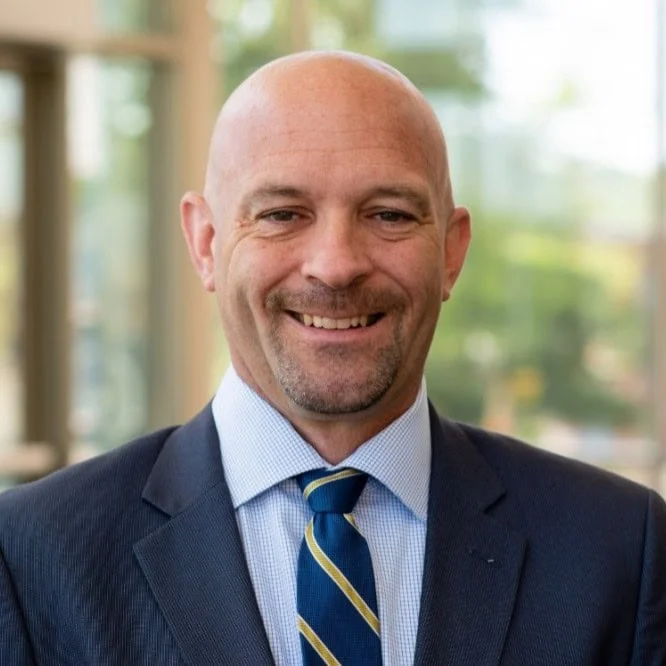
Steve Degnan is an executive keynote speaker and organizational consultant specializing in leadership development, team resilience, and workplace culture transformation. With 32 years of corporate experience, including 20 years as CHRO at a $13 billion food and pet food company, he works with Fortune 500 companies, business units in transformation, and senior leadership teams to build promotable leaders and organizations that perform under pressure. His advisory work combines candid, experience-based counsel with actionable frameworks that produce durable change.