
The machines are faster than you. They’re cheaper per transaction, they don’t call in sick, and they don’t need a retirement plan. If your leadership strategy is still built around humans doing what machines can now do better, you’re not running an organization. You’re running a very expensive workaround.
Here’s the thing nobody wants to say out loud: that’s actually good news.
When repetitive tasks get automated, the humans who remain have one job: be irreplaceable. The question is whether your organization knows how to build that, measure it, and lead it.
Key Takeaways
• AI and robotics can scale output, but they can’t define what matters to your organization or sacrifice anything for it
• Continuous improvement and complex problem-solving require human ingenuity that no current system can replicate
• Personal sacrifice for team goals is a uniquely human leadership act that inspires real behavioral change in others
• Self-awareness is the prerequisite for working on what actually matters, and machines don’t have it
• The organizations that win in an automated world won’t be the ones with the best AI. They’ll be the ones who know what to do with the humans AI can’t replace
What Are the Real Limits of AI and Automation?
AI hallucinates. That’s not a glitch they’re working on. It’s a structural feature of how large language models work: they generate plausible-sounding outputs based on pattern matching, not verified truth. A system that can’t distinguish between what it knows and what it’s confidently guessing is not a system you want making judgment calls about people, strategy, or ethics.
Robotics and automation have transformed manufacturing, logistics, and data processing. But the problems that have plagued organizations for decades, things like poor communication, misaligned priorities, disengaged teams, and leaders who can’t make hard calls, are still very much alive. Unlimited computing power hasn’t touched them.
The reason is structural, not technical. Human problems aren’t optimization problems. They’re meaning problems. And meaning is not something you can compute.
Consider a typical case: a large consumer goods company deploys an AI-driven demand forecasting system that dramatically reduces inventory waste. Six months later, the operations team is still fighting the same cross-functional alignment issues they had before the rollout. The AI made the data cleaner. It didn’t make the people clearer.
That’s the gap. And it’s yours to fill.
Why Is Human Ingenuity Still the Ultimate Competitive Asset?
Continuous improvement is the discipline of finding a better way to do things, not once, but as a permanent operating posture. It’s the kind of thinking that doesn’t start with a dataset. It starts with a person who looks at how something is done and asks, “Why are we still doing it this way?”
AI can analyze existing processes. It can surface inefficiencies you’ve already created. What it can’t do is imagine a fundamentally different approach that doesn’t yet exist in the training data. That’s not a limitation they’ll fix in the next model release. Genuine ingenuity requires the capacity to reject the past, and machines are built on it.
The organizations that will outperform in an automated world aren’t the ones who automate the most. They’re the ones who free their people to do the work that actually requires a human brain.
The people who stay valuable are the ones who keep finding better ways. Not better processes handed to them. Better questions they’re asking themselves.
If you’re serious about developing leadership effectiveness across your organization, the starting point isn’t a new technology stack. It’s building a culture where ingenuity is expected, rewarded, and modeled from the top.
Can AI Replicate Personal Sacrifice? No. And this is the contrarian claim worth sitting with.
Personal sacrifice for the greater good of a team is a uniquely human act that cannot be faked, automated, or approximated by any system. When a leader takes the blame publicly to protect a team member who made an honest mistake, something happens in the room that no algorithm can produce. People notice. They remember. They recalibrate what loyalty looks like.
The mechanism isn’t inspiration in the abstract. It’s behavioral recalibration through witnessed proof. When someone sacrifices something real, it answers the question every person on your team is quietly asking: “Is this leader actually in this with me, or are they managing me from a safe distance?”
AI can generate a message that sounds empathetic. It can draft a speech about team values. It can even model what a “high-performing culture” looks like based on organizational data. What it cannot do is give something up. And giving something up is what makes people follow you into hard things.
Sacrifice isn’t a soft leadership virtue. It’s a hard competitive advantage. Organizations where leaders visibly sacrifice for their teams retain talent, sustain trust through disruption, and recover faster from failure. The causal chain runs through human psychology, not process design.
If you want to see where your organization stands on this, the leadership assessment is a fast, honest starting point.
How Do You Determine What Actually Matters When Everything Feels Urgent?
Here’s the second contrarian claim: most organizations don’t have a clarity problem. They have a self-awareness problem disguised as a priority problem.
AI can rank tasks by frequency, cost, or time-to-completion. It can tell you what your organization has been doing. It cannot tell you what your organization should be doing, because that requires someone to make a values-based judgment about what kind of company you want to be and what kind of impact you’re trying to have.
Working on what matters is not a productivity question. It’s a leadership question.
Consider the “Signal vs. Static” discipline: the practice of distinguishing between activity that creates real organizational value and activity that just creates the appearance of motion. The discipline requires self-awareness, specifically the ability to see your own biases about what feels productive versus what actually moves the organization forward.
A common scenario: a senior leadership team spends two quarters optimizing a reporting process that consumes significant time across three departments. The process produces data that, when examined honestly, nobody uses to make decisions. The automation made it faster. The self-awareness to ask whether it should exist at all was missing.
That’s not a technology failure. That’s a leadership gap.
This is where Steve Degnan’s consulting and keynote work does its most direct work: helping leadership teams cut through the organizational noise and identify what actually deserves their human attention.
The Human Impact Framework: A Decision Tool for the Automation Era
The Human Impact Framework is a three-question filter for deciding where human effort should be concentrated once automation handles the repeatable work.
Use it when your team is deciding how to redeploy capacity after a technology implementation, or when you’re evaluating whether a role, process, or initiative deserves continued human investment.
| Question | What AI Can Do | What Requires a Human |
| Can we find a better way? | Analyze existing data for inefficiencies | Imagine approaches that don’t yet exist |
| Who will sacrifice for this team? | Model historical sacrifice patterns | Actually give something up to build trust |
| What actually matters here? | Rank by frequency, cost, or time | Make values-based judgments about purpose |
The three questions map directly to the three chapters referenced above. They’re not theoretical. They’re the three places where human leadership creates irreplaceable value in an automated environment.
Don’t use this framework as a one-time audit. It’s a recurring leadership conversation, not a project.
If you’re working through a business transformation and want a structured way to apply this thinking, Steve’s approach to agile re-engineering is built around exactly this kind of practical, no-theater methodology.
The machines are getting better. Make sure your people are too.
FAQ
Isn’t AI going to keep improving until it can do everything humans do?
Current AI systems improve at specific, bounded tasks. The categories that remain distinctly human, including values-based judgment, genuine sacrifice, and the kind of ingenuity that rejects existing frameworks entirely, aren’t on a trajectory toward automation. They require consciousness, stakes, and the capacity to lose something real. No roadmap currently points there.
How do I know if my organization is actually using human talent well or just keeping people busy?
Ask whether the work your people are doing could be done by a well-trained system. If the honest answer is yes for most of it, you have a deployment problem, not a talent problem. The Signal vs. Static discipline described in Steve’s Promotable and Fireproof framework is a practical starting point for that audit.
What does “sacrifice” actually look like in a corporate leadership context?
It looks like a senior leader publicly owning a team’s failure instead of pointing to the individual who made the call. It looks like giving up a budget line to protect headcount on someone else’s team. It looks like recommending a high-potential person for a role that takes them out of your own department. Small acts. Real cost. Disproportionate impact on team trust.
Can a keynote or consulting engagement actually change how a leadership team operates?
Not by itself. What it can do is create a shared language, surface the specific gaps the team hasn’t been willing to name, and give leaders a framework they can actually use. The change happens in the follow-through. Steve’s approach is built around giving teams tools they can apply without a consultant in the room, because that’s the only kind that sticks.
How long does it take to see results from this kind of organizational work?
Cultural shifts don’t happen in a quarter. But behavioral shifts, specific leaders making different decisions, teams having different conversations, can show up within weeks of a well-run engagement. The honest answer is that the timeline depends more on leadership commitment than on the quality of the framework.
Is this relevant for organizations that aren’t in manufacturing or tech?
Yes. The automation wave is hitting professional services, healthcare administration, financial analysis, and HR functions as aggressively as it hit manufacturing. The human impact question is just as urgent for a 600-person professional services firm as it is for a factory floor.
About the Author
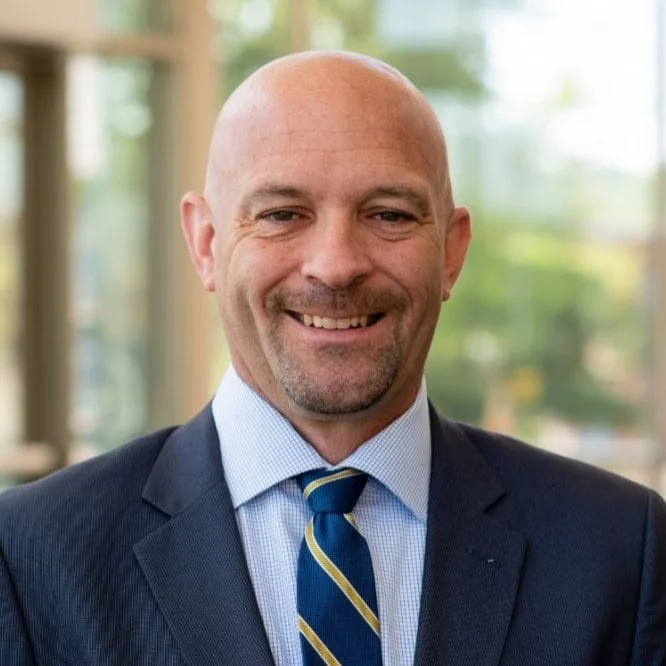
Steve Degnan – Pragmatic Leadership Keynotes & Advisory is a keynote speaking and organizational consulting practice specializing in leadership development, team resilience, and cultural transformation. With 32 years of real corporate experience including 20 years as CHRO at a $13B company, Steve works with Fortune 500 companies, executive teams, and high-potential leaders to build organizations where human performance is a genuine competitive advantage, not a talking point.